
Centering Underrepresented Voices in LGBTQI+ Projects: Lessons Learned and Best Practices
Centering Underrepresented Voices in LGBTQI+ Projects: Lessons Learned and Best Practices: The following lessons learned and best practices have been documented through the activities of the ACTIF working group. This working group brings together Canadian organizations that have received funding from the ACTIF Fund to carry out, in partnership with organizations in the South, projects […]
Communicating the impact of our projects: Lessons learned and best practices
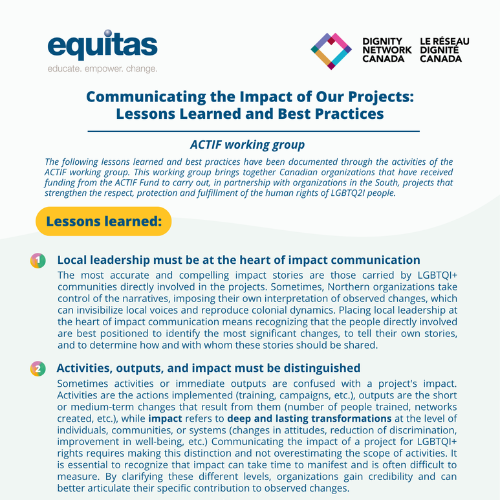
The document highlights the importance of centering local communities in storytelling, distinguishing activities from real impact, and prioritizing people’s safety over the visibility of initiatives. You will find eight good practices for developing impact communications that are more inclusive, safe, and grounded in local realities. Also available in French.
Conversation Starters: Rights-based conversations for mixed youth groups
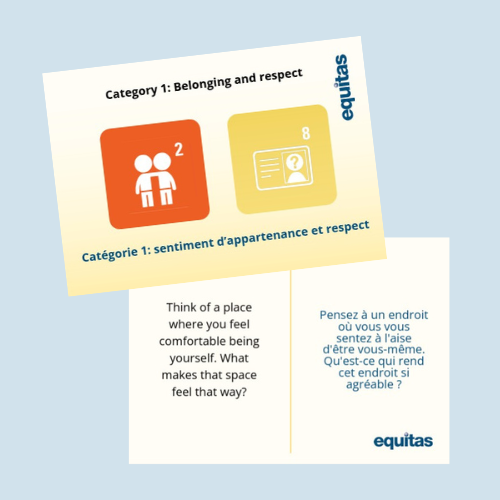
This game designed for youth aged 12-19 invites them to reflect on fairness, respect, inclusion, and rights in their everyday lives while learning about children’s rights. It works well with mixed groups, including newcomer and non-newcomer youth, recognizing that youth spaces are shaped by many different experiences and backgrounds.
Collaborating to capture and share cross-program learnings: Lessons learned and best practices
The following lessons learned and best practices have been documented through the activities of the ACTIF working group. This working group brings together Canadian organizations that have received funding from the ACTIF Fund to carry out, in partnership with organizations in the South, projects that strengthen the respect, protection and fulfillment of the human rights […]
Allyship Sparks: Conversation Cards for Youth and their Adult Allies
These cards help young people aged 12+ and the adults who support them: parents, guardians, youth workers, teachers, coaches, mentors, etc. engage in honest, open and constructive dialogue about allyship across generations and in various settings.
Practicing Youth Allyship Through Human Rights
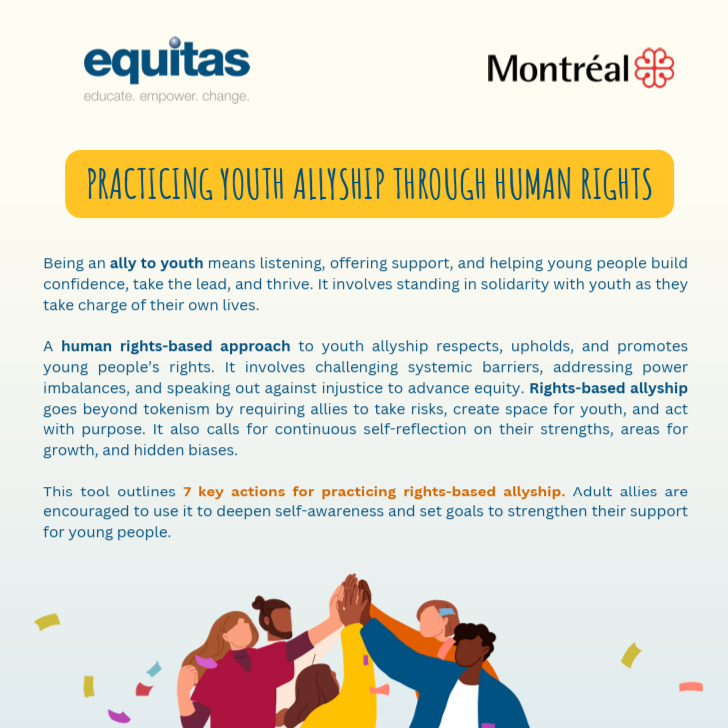
This tool outlines 7 key actions for practicing rights-based allyship. Adult allies are encouraged to use it to deepen self-awareness and set goals to strengthen their support for young people. Also available in French.
Celebrate National Child Day: Let’s Make Sure Kids Are Heard!
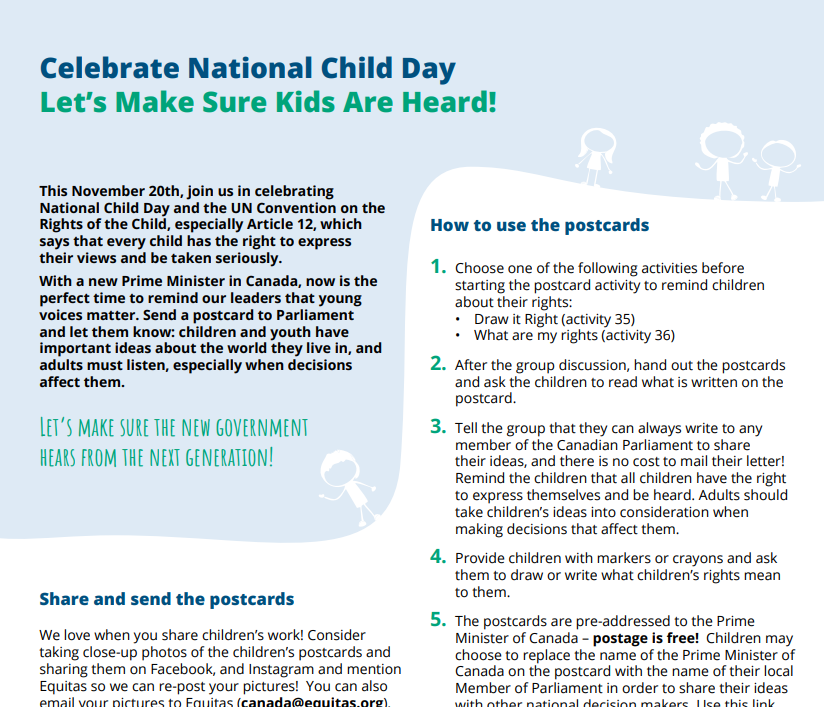
This activity, divided into two parts, invites young people to first discover or remember their rights, before letting them express themselves on a postcard to be sent to the federal Prime Minister. Also available in French.
Building solidarity and supporting partners in challenging times: Lessons Learned and Best Practices
The following lessons learned and best practices have been documented through the activities of the ACTIF working group. This working group brings together Canadian organizations that have received funding from the ACTIF Fund to carry out, in partnership with organizations in the South, projects that strengthen the respect, protection and fulfillment of the human rights […]
Dignity in Dialogue: THE POWER OF OUR COMMUNITIES. Centering and Activiting Collective Power
In celebration of International Day Against Homophobia, Biphobia, Interphobia, and Transphobia (IDAHOBIT) and the start of Pride season, we hosted our second Dignity in Dialogue session with the support of the Act Together For Inclusion Fund (ACTIF). The conversation explored how we understand and use power in our movements—centering solidarity, narrative change, emotional strategy, and […]
Dignity in Dialogue: WE HAVE ALWAYS EXISTED, WE WILL ALWAYS EXIST. Global Trans and Gender Diverse Resistance Amidst Rising Opposition
In recognition of Trans Day of Visibility 2025, Dignity Network Canada (DNC) hosted its first Dignity in Dialogue session with the support of the Act Together For Inclusion Fund (ACTIF). A powerful dialogue that addressed the escalating attacks on trans rights worldwide and highlighted strategies for building trans-inclusive, cross-border movements. Also available in French.