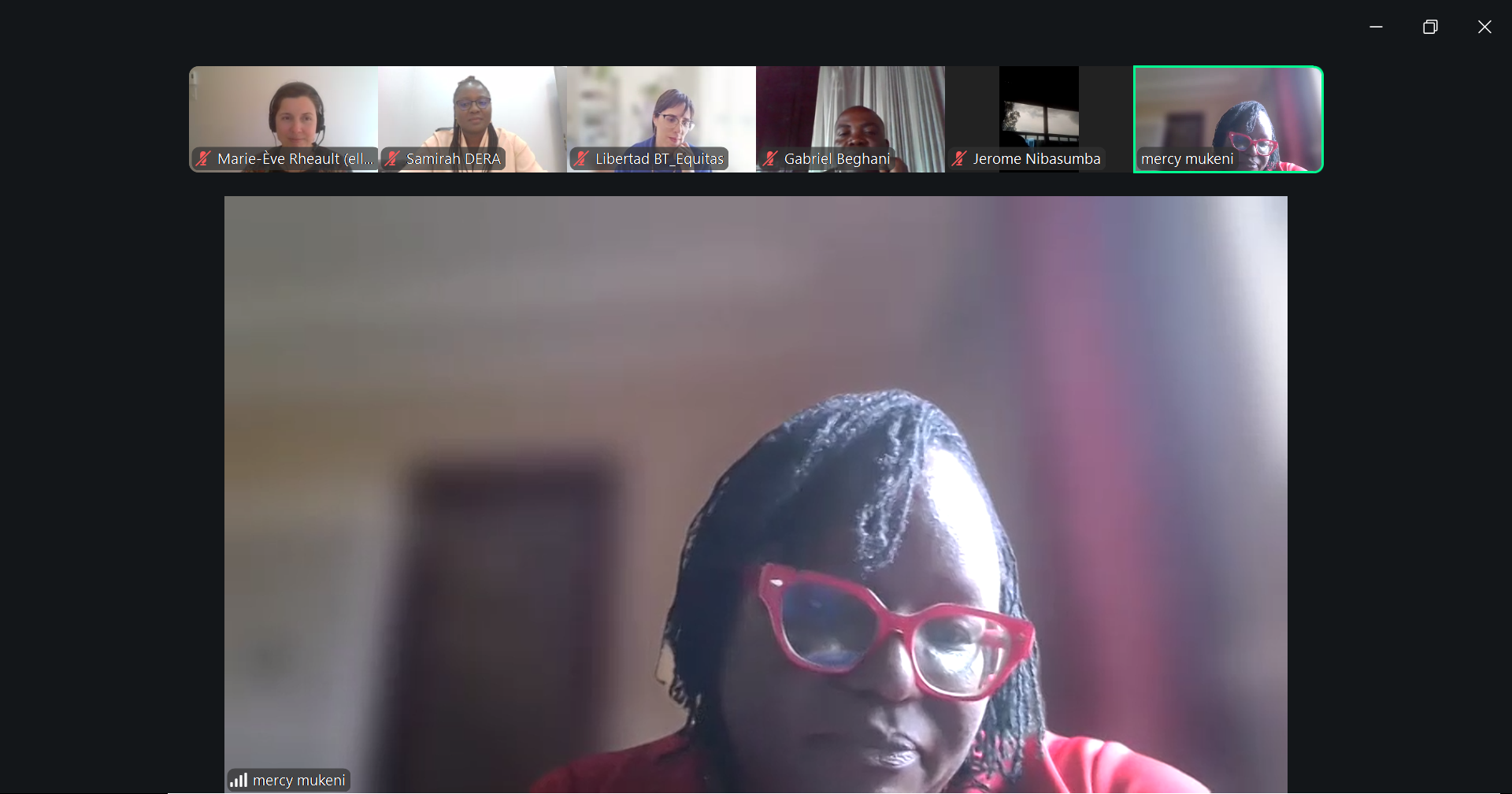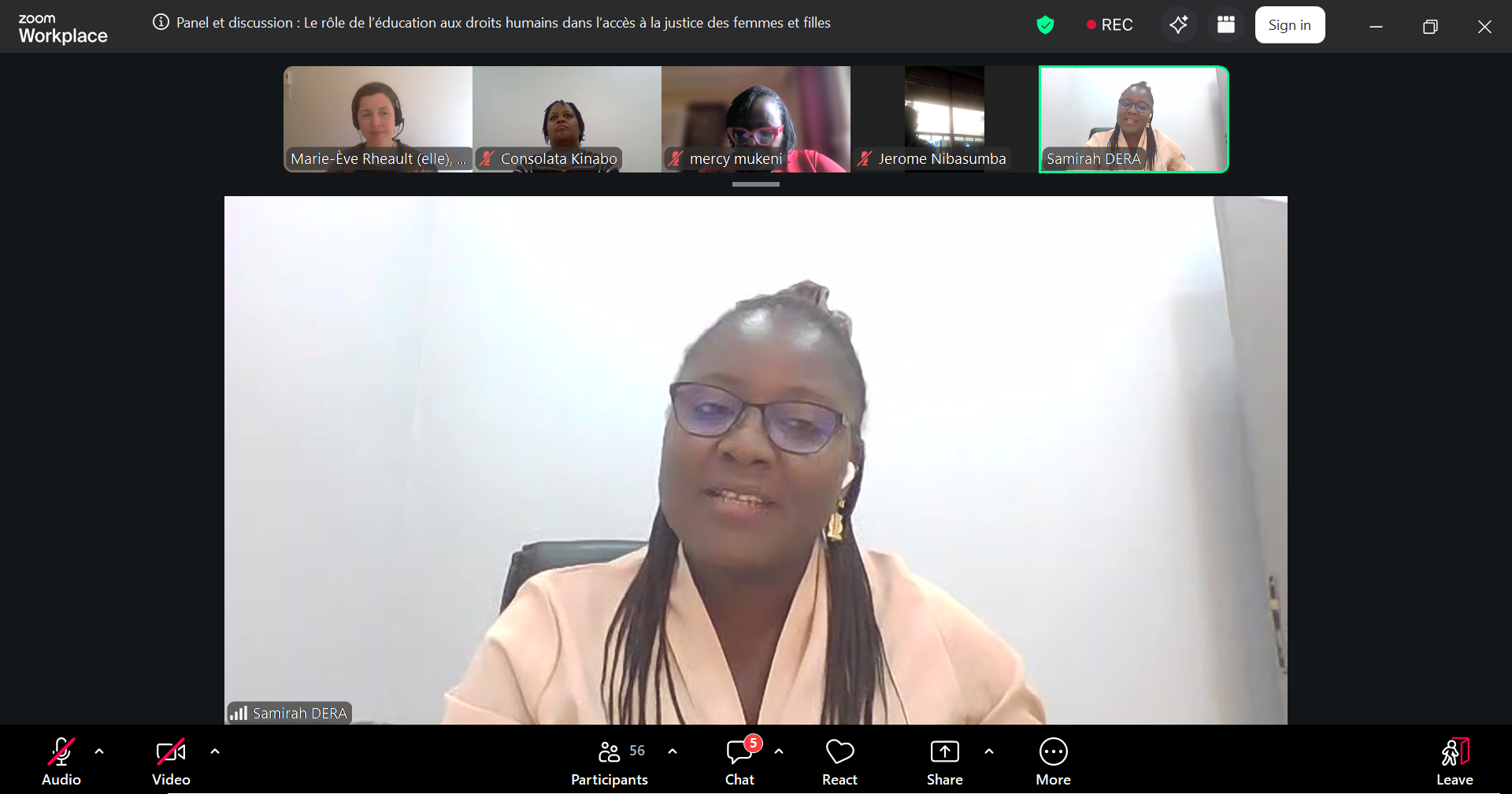
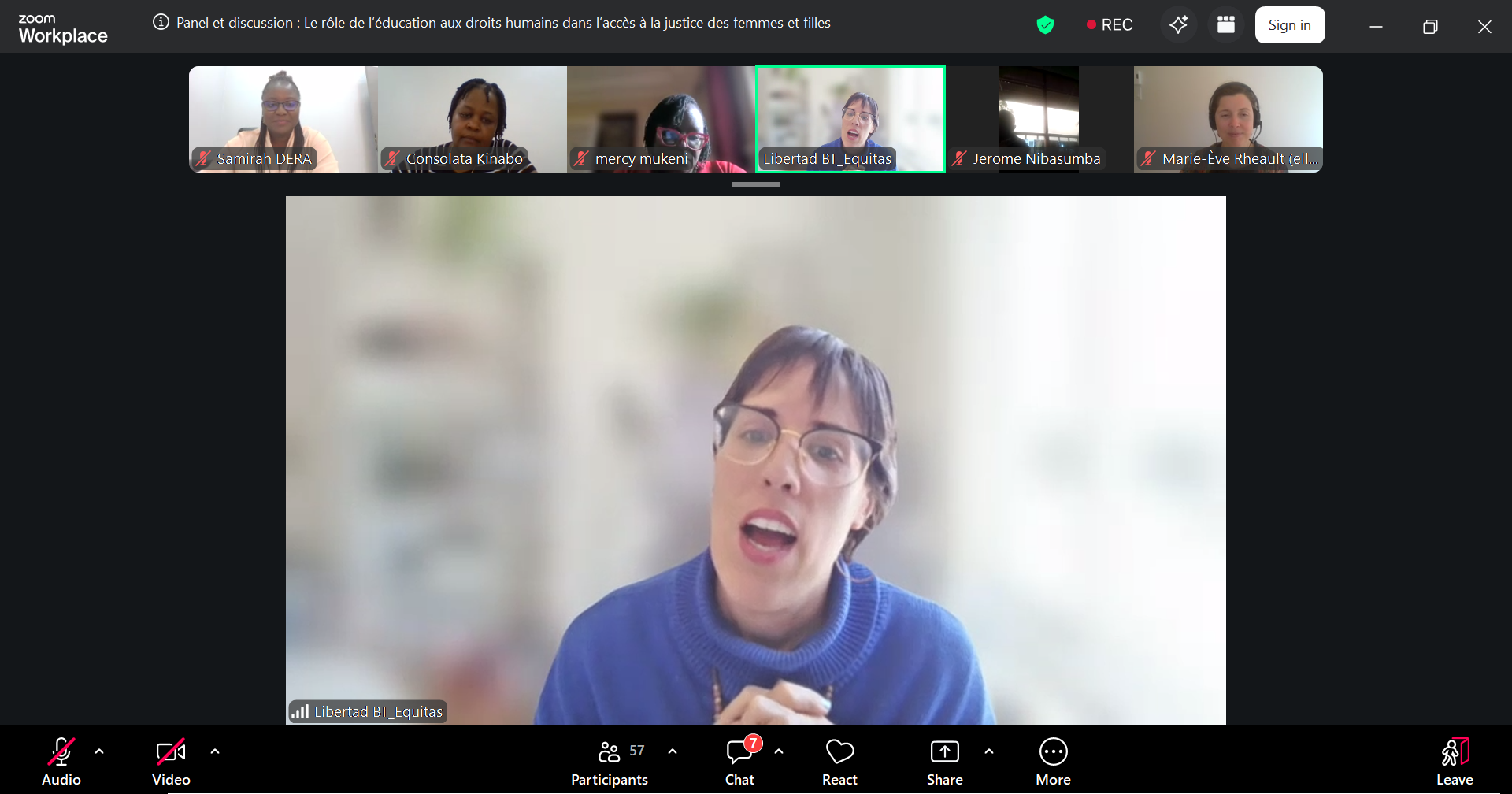
Women and girls continue to face significant and persistent barriers to accessing justice around the world. On the sidelines of the 70th session of the Commission on the Status of Women (CSW70), held at United Nations Headquarters from March 9 to 19, Equitas and the Paul Gérin-Lajoie Foundation co-organized a panel discussion on a critical question: What role does human rights education play in women’s and girls’ access to justice?
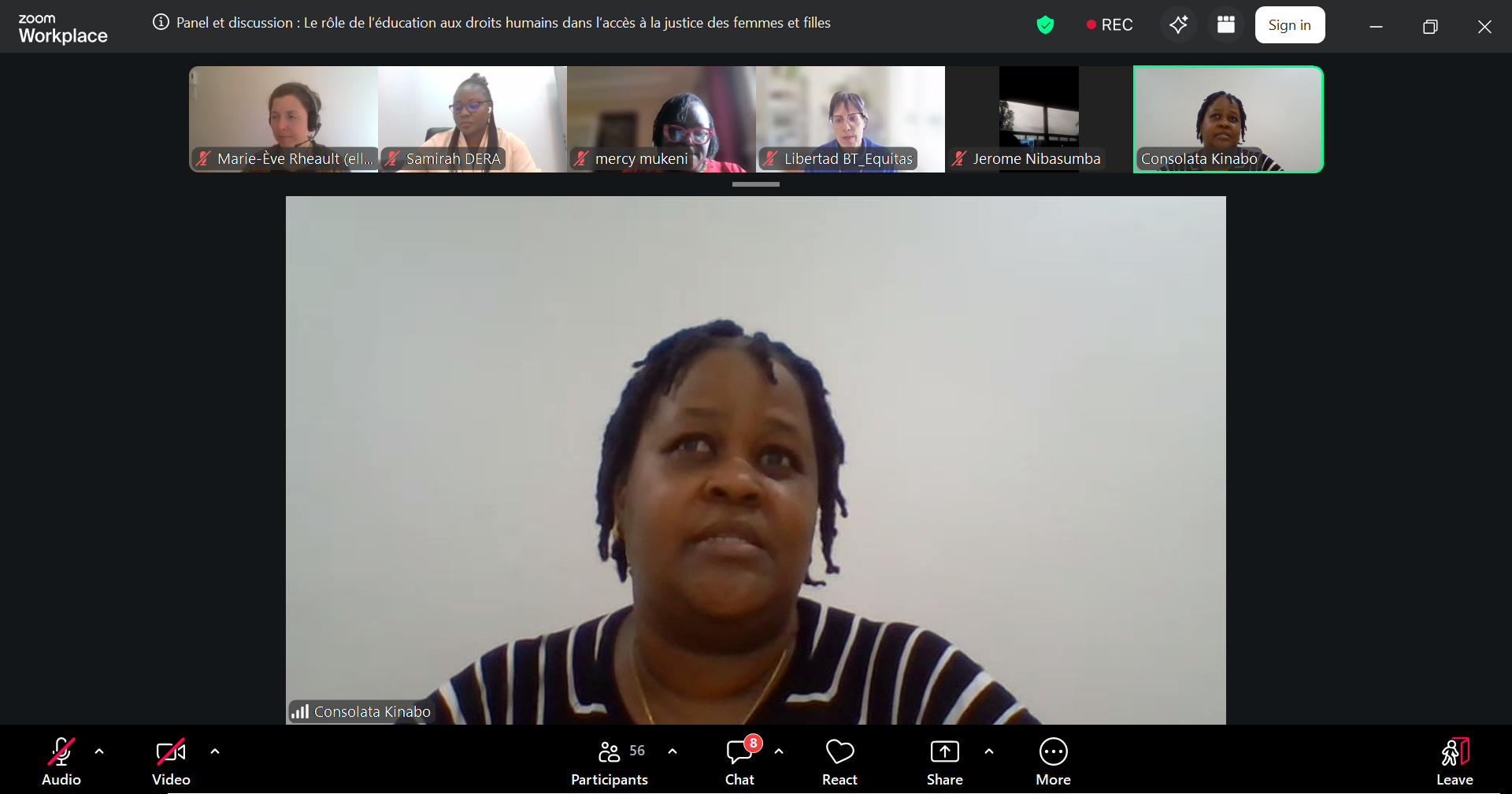
Bringing together human rights defenders from African civil society organizations, this discussion provided an opportunity to compare the practical experiences of three Equitas partner organizations and a civil society organization in the DRC, a partner of the Paul Gérin-Lajoie Foundation:
- Consolata Kinabo, Tusonge Community Development Organization, Tanzania
- Samirah Dera, Mouvement burkinabè des droits de l’Homme et des Peuples, Burkina Faso
- Mercy Mukeni, Women’s Empowerment Link, Kenya
- Gabriel Beghani, Pilier aux femmes vulnérables actives, DRC
Through their experiences, the panelists highlighted the persistent challenges, as well as promising strategies for making the justice system a truly accessible, inclusive, and equitable space for all women and girls.
At the heart of the discussions, one conclusion stands out: human rights education is an essential tool for preventing violations, empowering people, and transforming systems. Here are the key takeaways from this discussion.
KEY TAKEAWAYS
The ideal justice system is inclusive, accessible, and equitable. To achieve this, we must:
- Eliminate barriers for women and girls
- Make women and their issues visible
- Integrate gender-based approaches, including intersectional gender analysis
- Include women in the design of the justice system
- Listen to women and girls in all their diversity
- Take into account and address power dynamics
- Align with the values of equality and non-discrimination for all women and girls (without leaving the most marginalized outside the justice system)
- Protect survivors’ dignity throughout the process, do no harm, and ensure confidentiality
The barriers to women’s rights and access to justice that we face:
- Cultural norms that discriminate against women and girls, reinforce victimization, generate fear, and create a culture of silence in which women are rendered invisible and suffer harm
- Lack of or insufficient capacity among authorities responsible for ensuring women’s and girls’ access to justice, as well as among religious and community leaders (lack of awareness of resources, mechanisms, and their roles)
- Lack of funding to implement existing mechanisms to make justice accessible to women and girls
Strategies for overcoming barriers:
- Conduct legal awareness-raising activities on systems, processes, available avenues, and resources
- Improve access by bringing communities closer to the justice system (e.g., mobile legal clinics and human rights kiosks)
- Work with various justice system actors (lawyers, police, judges, religious and community leaders) and strengthen their accountability to women and girls
- Adopt a survivor-centered approach: refocus processes on their well-being rather than on perpetrators, while building the capacity of actors to integrate this approach
- Deconstruct gender biases in justice systems with various stakeholders, including institutions
- Monitor the implementation of judicial decisions to ensure the system’s effectiveness and reduce impunity
- Adapt materials to make them accessible to communities, particularly by addressing illiteracy (local languages, adapting concepts, identifying needs)
- Measure the impact of human rights education on gender equality in order to advocate for its funding in a context of budget cuts
Human rights education enables people to:
- Understand their rights, know what to do, and build self-esteem and the courage to take action
- Strengthen the capacity for action (both individual and collective), solidarity, and resilience
- Hold duty-bearers accountable (while building their capacity and understanding of their responsibilities)
- Challenge power dynamics
Men as an integral part of the solution:
- The importance of involving men from the outset to challenge gender stereotypes, particularly among young boys
- Encouraging men and boys to become agents of change to transform harmful gender norms
- The importance of providing diverse role models to transform gender roles in society and families, moving toward more equitable relationships and masculinities
- Initiate discussions on what it means to be an ally: do not monopolize speaking time or spaces dedicated to women’s rights, but rather adopt a supportive role
This gives us hope to continue working on women’s rights and access to justice:
- To bear witness to women’s growing awareness of their rights and their ability to speak out and assert them
- To observe the impact of human rights work in transforming discriminatory behaviors, challenging power dynamics, and dismantling oppressive systems
- Resilience is fueled by collaboration and solidarity, breaking down isolation and bringing people together to continue the fight (e.g., regional initiatives, collective spaces)
- Historically, high-impact civil society work shows that change is possible; we must believe in ourselves and in human rights movements. We will not stop! The seeds sown today will grow into a forest
- Collective spaces for learning and support strengthen human rights and gender equality work
- Serving a cause greater than ourselves: a true call to action
The discussions during this panel show that access to justice for women and girls requires a transformation of norms, institutions, and power dynamics, in which human rights education plays a central role. By strengthening knowledge, agency, and solidarity, it enables people to challenge inequalities and bring about systemic change.
Despite the challenges, the shared experiences demonstrate a very real change, driven by women who are organizing, speaking out, and asserting their rights. Supporting these efforts is essential to building more just societies, where justice is truly accessible to everyone.