Appel à candidatures : Programme international de formation aux droits humains (PIFDH) d’Equitas 2026 : En savoir plus
Call for Applications: Equitas International Human Rights Training Program (IHRTP) 2026: Learn more

Our resources

Home / Our resources

Resources to support human rights education

Browse our resource library, a space designed to support educators, organizations, and leaders committed to promoting human rights. You will find practical tools, guides, reports, and toolkits to strengthen your human rights education efforts. Filter by language, thematic area, or type of resource to quickly find the material that suits your needs and context.

0 results found
Language
Thematic
  • More...Less...
Type of resource

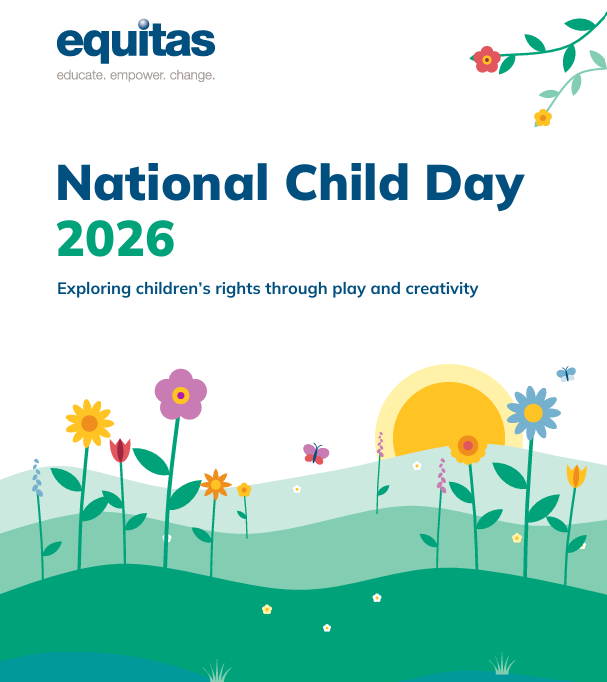
National Child Day 2026

This guide has two activities that invite children to explore their rights through play and creativity, express their ideas, share their experiences and reflect on how we can help ensure everyone’s rights are respected. Adaptations are also included for older children and youth, encouraging them to think more deeply about their rights and how these rights are respected in their communities. Also available in French.

🌐 English, French
🏷️ Children & youth
📄 Activities & workshops

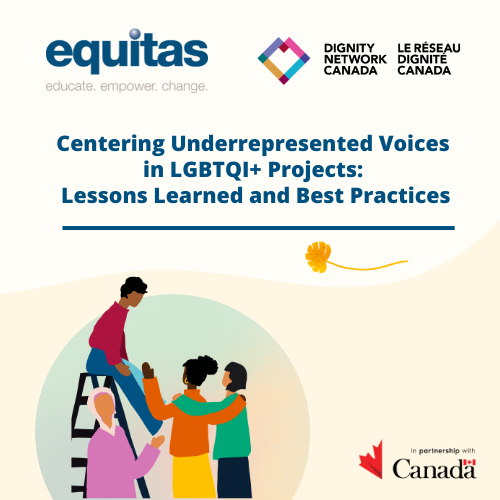
Centering Underrepresented Voices in LGBTQI+ Projects: Lessons Learned and Best Practices

Centering Underrepresented Voices in LGBTQI+ Projects: Lessons Learned and Best Practices: The following lessons learned and best practices have been documented through the activities of the ACTIF working group. This working group brings together Canadian organizations that have received funding from the ACTIF Fund to carry out, in partnership with organizations in the South, projects that strengthen the respect, protection and fulfillment of the human rights of LGBTQ2I people. Also available in French.

🌐 English, French
🏷️ 2SLGBTQI+, Equity diversity & inclusion, Participation & community engagement
📄 Reference materials

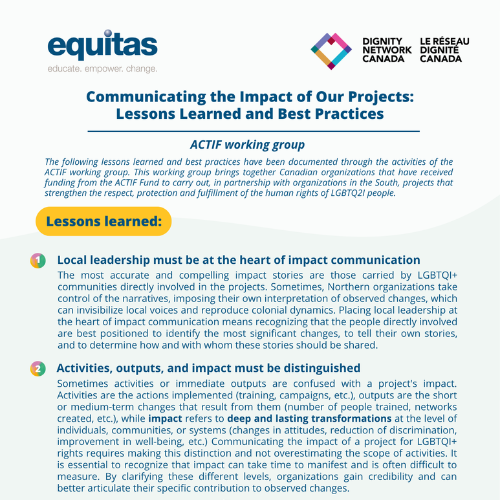
Communicating the impact of our projects: Lessons learned and best practices

The document highlights the importance of centering local communities in storytelling, distinguishing activities from real impact, and prioritizing people’s safety over the visibility of initiatives. You will find eight good practices for developing impact communications that are more inclusive, safe, and grounded in local realities. Also available in French.

🌐 English, French
🏷️ 2SLGBTQI+, Equity diversity & inclusion, Peace & security
📄 Reference materials

Conversation Starters: Rights-based conversations for mixed youth groups

This game designed for youth aged 12-19 invites them to reflect on fairness, respect, inclusion, and rights in their everyday lives while learning about children’s rights. It works well with mixed groups, including newcomer and non-newcomer youth, recognizing that youth spaces are shaped by many different experiences and backgrounds.

🌐 English, French
🏷️ Children & youth, Equity diversity & inclusion, Participation & community engagement
📄 Activities & workshops

Collaborating to capture and share cross-program learnings: Lessons learned and best practices

The following lessons learned and best practices have been documented through the activities of the ACTIF working group. This working group brings together Canadian organizations that have received funding from the ACTIF Fund to carry out, in partnership with organizations in the South, projects that strengthen the respect, protection and fulfillment of the human rights of LGBTQ2I people. Also available in French

🌐 English, French
🏷️ 2SLGBTQI+, Equity diversity & inclusion
📄 Reference materials

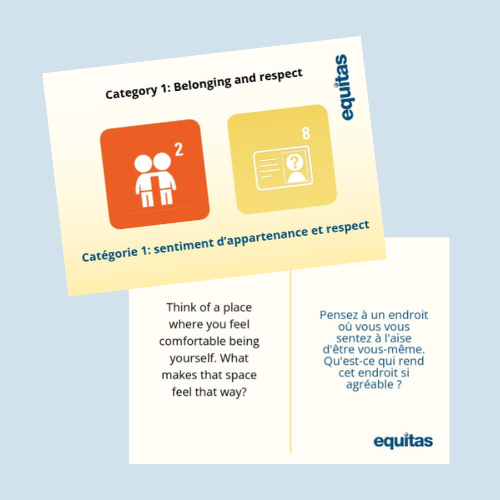
Allyship Sparks: Conversation Cards for Youth and their Adult Allies

These cards help young people aged 12+ and the adults who support them: parents, guardians, youth workers, teachers, coaches, mentors, etc. engage in honest, open and constructive dialogue about allyship across generations and in various settings.

🌐 English, French
🏷️ Children & youth, Participation & community engagement
📄 Activities & workshops

Contribute to the creation and distribution of transformative educational resources.