The call for applications for the 43rd edition of the IHRTP (2026) is now open.
Location: Bangkok, Thailand
When: Fall 2026
APPLICATION DEADLINE : Monday, June 8, 2026
Space is limited – early applications are encouraged.
*Pour lire cette page en français, cliquez ici.
For the first time in over 40 years, the International Human Rights Training Program (IHRTP) will be held outside Canada, in Bangkok, Thailand, marking a significant milestone in the evolution of Equitas’ flagship international training program.
This edition reflects Equitas’ commitment to expanding access to human rights education and strengthening engagement with partners and movements across the Global South.
A global program with lasting impact
“In a time of increasing divisiveness, learning about the powerful tool of human rights and about how to dialogue through difference is more than ever relevant and critical. Equitas’ International Human Rights Training Program creates a great setting to do just that. For over four decades, thousands of human rights defenders from over 140 countries have learnt not just about the human rights framework but also from each other. They have gone on to lead significant social changes in their respective communities in a way that bridges through differences to protect the rights for all.”
– Odette McCarthy, Executive Director at Equitas

Program at a Glance
- Location: Bangkok, Thailand
- Online preparatory phase: 15 September – 23 October, 2026 (self-paced, approximately 12–15 hours over 6 weeks)
- In-person training: November 1 – 13, 2026 (11-day intensive training)
- Languages: English and French
- Participants: Approximately 100 human rights educators and defenders from around the world
- Participation fee: $9,180 CAD (Includes: training fees, accommodation and meals, educational materials, and medical insurance covering emergencies)
- International travel and visa costs are not included.
- Bursaries: Limited full and partial bursaries may be available
A Program with Global Recognition
For over four decades, the IHRTP has contributed to strengthening human rights movements worldwide.
As Equitas’ flagship global training program, it has supported generations of practitioners to transform their work and contribute to social change in their communities.
Learn more
How to Apply?
Applying is a three-step process:
Step 1 – Review the program information
Before applying, please review:
Step 2 – Complete the online application form
Submit your application through the online application form:
The form is available in English and French.
You do not need a Jotform account to apply. Be sure to save your form regularly as you complete it.
You can save your partially completed application and come back to it later before officially submitting it.
Please note: Applicants from previous editions must submit a new application for the 2026 edition.
Step 3 – Upload required documents
As part of the application form, please upload:
- Signed Memorandum of Agreement
- Two reference letters from organizations familiar with your work
- (For applicants affiliated with an organization)
A brochure and/or mission statement describing your organization
Application deadline: June 8, 2026
Who may Apply?
The program is intended for human rights educators and defenders actively engaged in promoting and protecting human rights.
Applicants may be affiliated with an organization or work independently, but should:
- Have at least two years of relevant experience
- Be able to apply their learning in practice
- Be committed to contributing to change in their communities
- Be comfortable working in diverse and intercultural environments
- Be proficient in English or French
- Be 18 years or older
Why Apply?
1. Learn through a participatory approach
Strengthen your practice through reflection, collaboration and experiential learning.
2. Turn learning into action
Develop concrete strategies to advance human rights and social change in your context.
3. Join a diverse global cohort
Learn with human rights educators and defenders from around the world.
4. Strengthen your professional practice
Deepen your tools, analysis and approaches for greater impact.
5. Build lasting networks
Become part of a global community of practice and solidarity.
6. Benefit from recognized expertise
Draw on more than four decades of Equitas experience in human rights education.
About the Program
The IHRTP is an internationally recognized intensive training program that has brought together more than 4,000 human rights educators and defenders from over 140 countries.
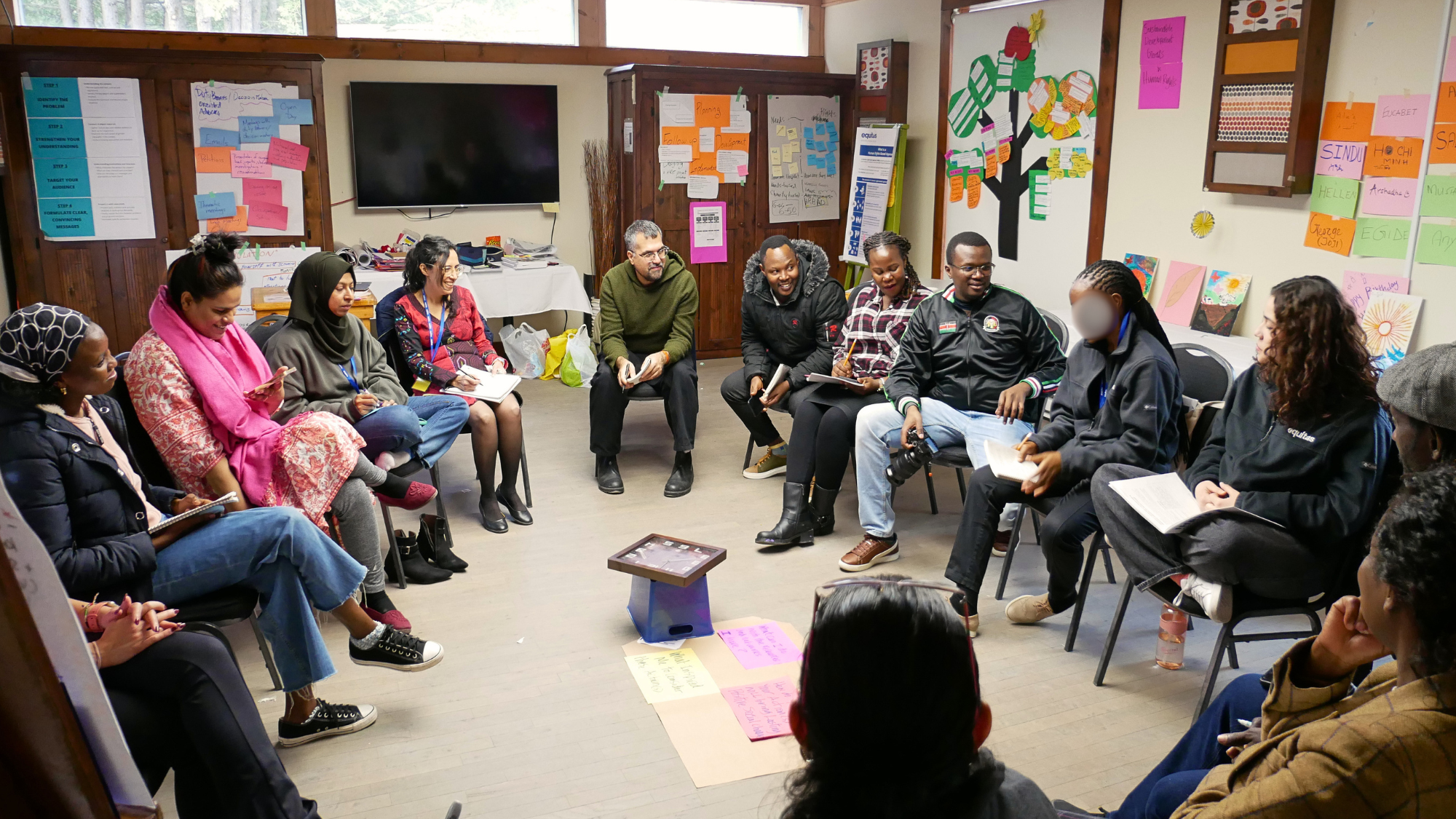
Using a participatory and experiential approach, the program supports participants to strengthen their knowledge, skills and strategies to advance human rights and social justice.
The program includes:
Online Preparatory Phase
Participants engage in a self-paced online preparatory phase (approximately 12–15 hours over six weeks) designed to build shared foundations, connect with peers, and prepare for the in-person training.
An 11-Day Intensive In-Person Training Experience
Through collaborative and practice-based learning, participants explore:
- Human rights education methodologies
- Advocacy tools and strategies
- Human rights-based and gender-transformative approaches
- Systems thinking and critical analysis
- Evaluation and action planning
Pathways to Action
Participants develop a practical action plan to apply their learning in their own contexts after the program.
Learn about past participants’ experiences
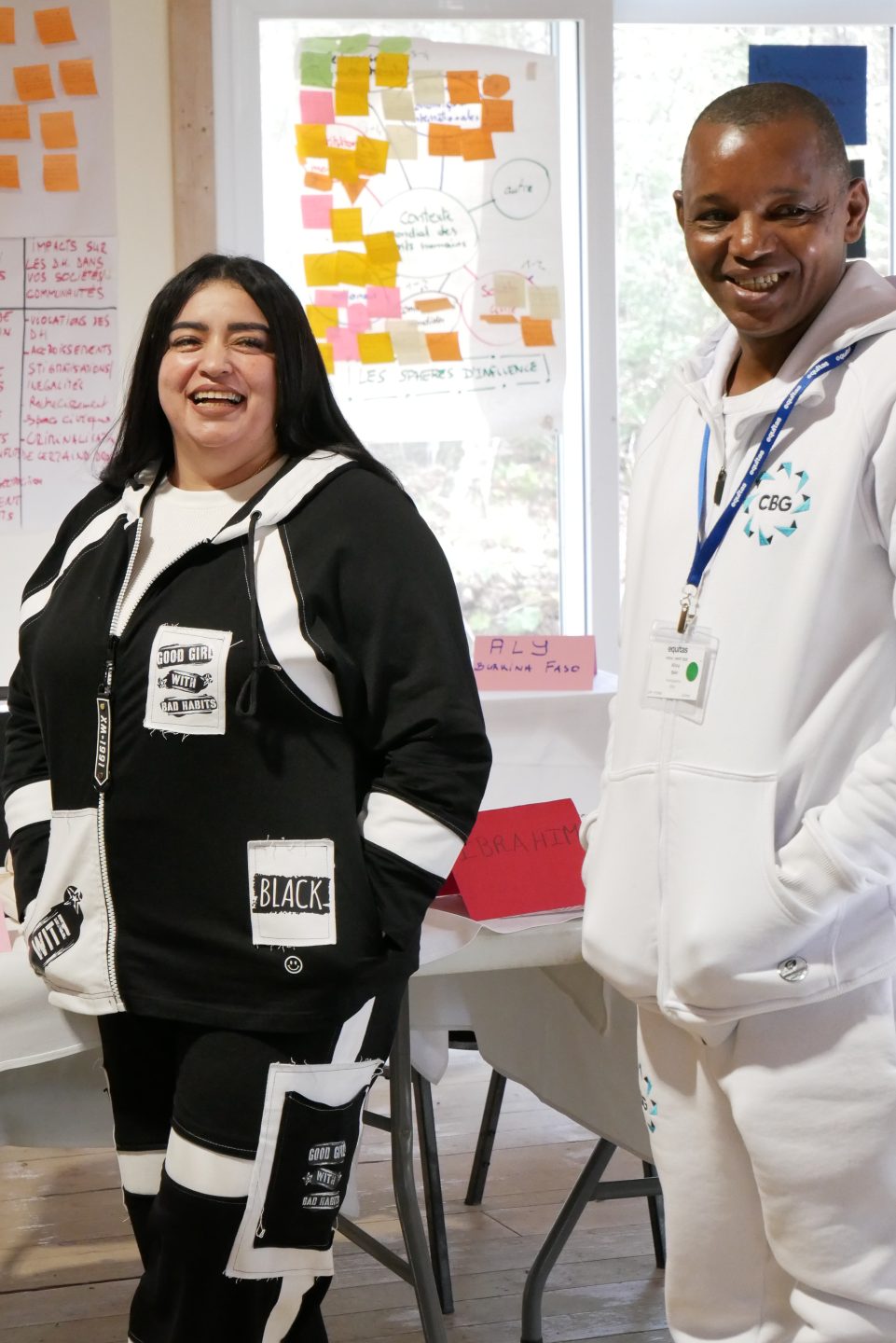
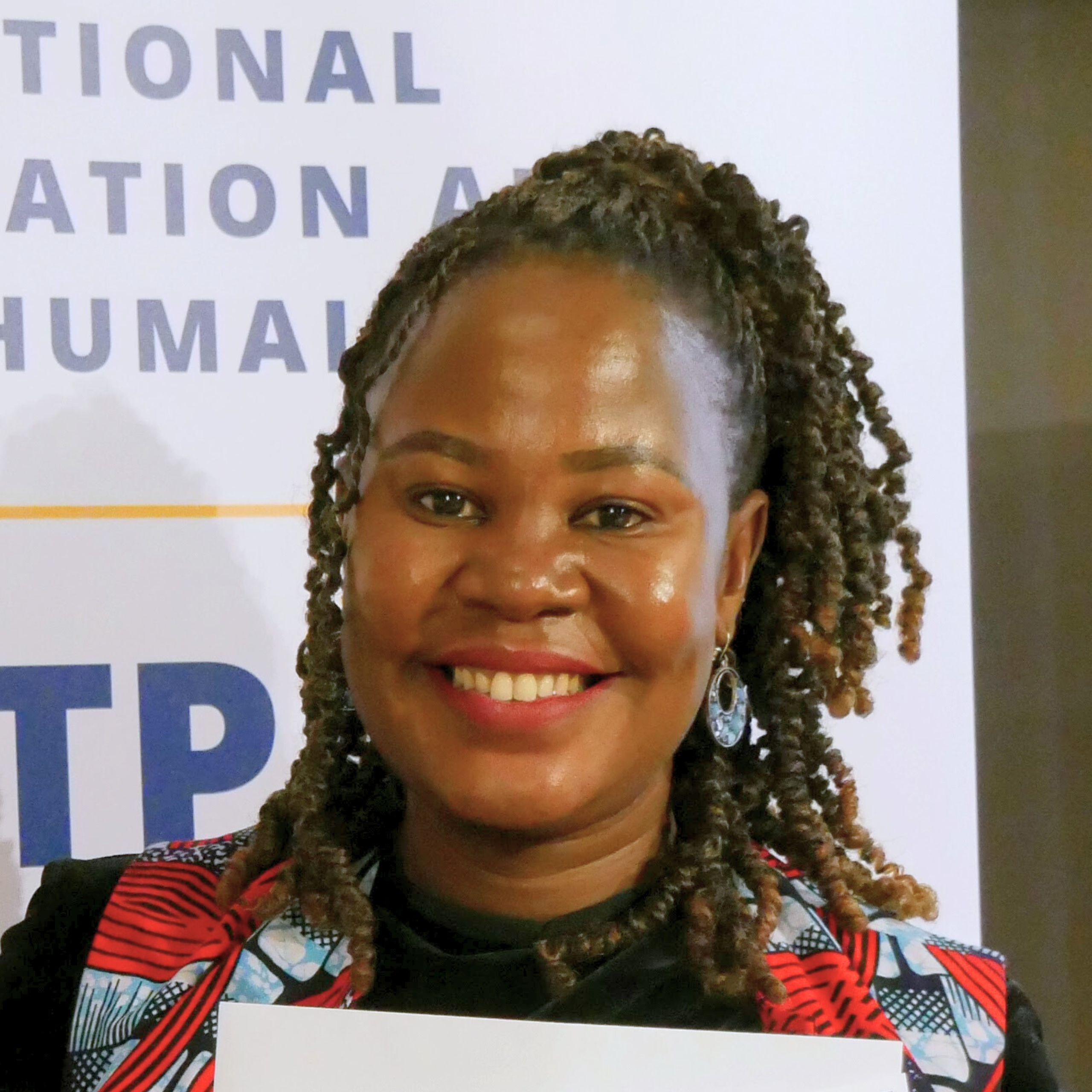
Participants were featured in interviews that were published as articles and podcast episodes. Click to access them!
I rise so others can rise. I speak so that silence is broken. I act so digging lives.
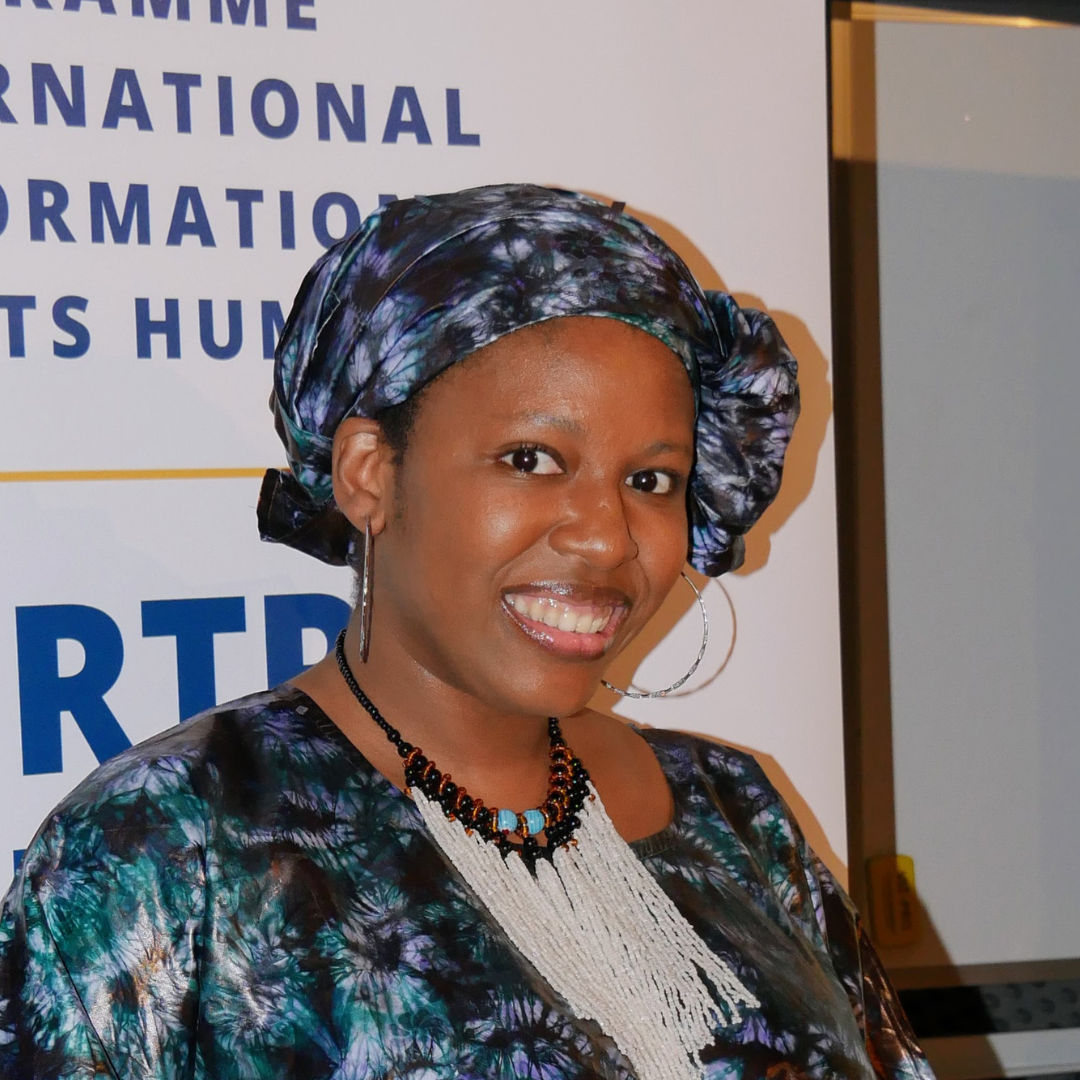
My work is about helping people raise their voices, understand their rights, access them, and claim them.
This new knowledge is essential for deconstructing stereotypes and promoting gender equality for all.

To continue fighting, you first have to survive. To survive, you have to take care of your mind.

What Participants Say About the IHRTP
Participants consistently highlight the program’s impact on their practices, perspectives and networks:
I left the program not only with stronger knowledge of human rights, but with a renewed sense of purpose and the confidence to translate that knowledge into concrete action within my organization.
The training provided practical, adaptable tools that I can directly integrate into my work. It bridged theory and practice in a way that is rare in international programs.
What stood out most was the learning environment, respectful, inclusive, and grounded in trust. It allowed for honest dialogue and meaningful exchange across very different realities.
Connecting with human rights defenders from around the world was one of the most valuable aspects of the program. These relationships continue to inform and strengthen my work.
The program is more than a training, it is a space that builds collective momentum. It reinforces the feeling that we are part of a global movement working toward shared goals.

Ready to Apply?
Applications close June 8, 2026.
FAQ - Frequently Asked Questions
A list of questions and answers about the IHRTP and the application process can be found below.
General Information
What is the IHRTP?
The International Human Rights Training Program (IHRTP) is a unique training that takes place in three phases:
- An online introductory component: 15 September – 23 October, 2026 (12 – 15 hours, asynchronous, self-paced)
- An 11-day in-person training in Bangkok, Thailand (November 1–13, 2026)
- Post-training follow-up to support participants in implementing their actions
Each year, participants from over 50 countries take part in this training.
The IHRTP is the only program in the world specifically dedicated to human rights educators and defenders. It focuses on:
✔️ International and regional human rights standards
✔️ Current human rights issues
✔️ Education and advocacy strategies
This is a unique opportunity for committed individuals to exchange with their peers and experts, to acquire practical tools to enhance the impact of their work, and join a global network of human rights practitioners.
Who is the program for?
The IHRTP is designed for:
✔️ Human rights educators who develop training programs and educational materials
✔️ Human rights defenders who advocate for the promotion and protection of human rights
Participants may be affiliated with:
✔️ Non-governmental organizations (NGOs)
✔️ National or regional institutions
✔️ Government agencies
To be eligible, each candidate must have at least two years of experience, either as a paid employee or a volunteer within their organization or as an independent practitioner.
In what language is the program offered?
The program is offered in French and English.
Participants must be able to read, write, and actively participate in discussions in one of these two languages.
What are the program's objectives?
By the end of the IHRTP, participants will be able to:
✔️ Apply internationally recognized human rights standards, principles, and values
✔️ Integrate a human rights-based approach, a participatory approach, and a gender-transformative approach into their work
✔️ Identify educational and advocacy tools and techniques to increase the impact of their actions
✔️ Develop critical thinking and analysis of local and international human rights contexts
✔️ Assess the outcomes of their human rights education and advocacy efforts
✔️ Incorporate Global South perspectives, local realities, and the voices of marginalized groups into their education and advocacy work
✔️ Create networking and collaboration opportunities to advance human rights and gender equality
✔️ Apply their learnings in practice to amplify their impact within their communities
What is the online component of the program?
The IHRTP 2025 includes an online introductory component, which will take place from September 15 to October 23, 2025.
What does this online phase include?
- 12 to 15 hours of asynchronous work at your own pace.
- Interactive activities to explore key human rights concepts and familiarize participants with the program’s methodology
- Online discussions and exchanges between participants to foster the creation of a learning community
- Readings, exercises, and reflections to deepen knowledge and prepare for the in-person training
📌 Participation in this online phase is mandatory to attend the in-person training.
What is Pathways to Action?
The Pathways to Action process helps you develop an action, idea, or initiative that you will begin to implement after the training ends. This action can be something modest and personal, or something more collective and large-scale. It may involve advocacy, education, community organizing, policy change, or any other approach suited to your local context.
A post-training follow-up is provided to support participants in carrying out their plan and to assess its impact in the field.
Application Process
How can I apply? What documents do I need to submit?
Since the 2025 edition, we have adopted a simplified application process that is more accessible and entirely independent of our former online platform. The entire application form must now be completed and submitted directly through the Jotform platform.
If you applied in previous editions, please note that you must submit a new application through this new process. Files from previous editions (2025, 2024, 2023…) will neither be reused nor reconsidered.
Steps to apply:
1- Complete the online application form using the following jotform link: IHRTP 2026 / PIFDH 2026 (available in French and English)
Application Form
You do not need to create a Jotform account to complete a form. To avoid losing your data, make sure to save your form regularly as you complete it and once you have finished.
2- Upload the required documents in the Files section of the application form:
- The signed Memorandum of Agreement
- Two reference letters from national and/or international human rights organizations (other than the applicant’s organization) that are familiar with your work and/or your organization’s work.
- For applicants affiliated with an organization: A brochure and/or mission statement describing your organization
You can save your partially completed application and return to it later before officially submitting.
3- Click the “Submit” button to send in your completed application
You will receive a confirmation email.
*Important note: Submission of your application will be FINAL — no changes will be possible after it has been sent. If important information or documents are missing, please contact us.
Application Deadline:
Your complete application file must be submitted no later than June 8, 2026.
We strongly encourage all applicants to start their application as early as possible to ensure that they have enough time to gather the required documents and to contact us if they need assistance.
If you have any questions or encounter difficulties, feel free to email us at: pifdh-ihrtp@equitas.org
What is the application deadline?
The deadline to submit an application to the IHRTP, which will take place in autumn 2026, is June 8, 2026.
We strongly recommend submitting your application several days before this date to avoid any last-minute technical issues.
Applicant Profile
Can I apply if I am a volunteer and not an employee?
Yes. A volunteer within an organization can apply for the International Human Rights Training Program (IHRTP) if they have been actively involved in the organization for at least two years.
The applicant must also meet the following criteria:
- Be able to influence the organization’s human rights education activities.
- Have knowledge of international human rights principles and instruments.
- Be committed to sharing acquired knowledge with colleagues and other stakeholders.
- Be sensitive to the challenges of working in a multicultural context and respect diversity.
Can I apply if I am not affiliated with an organization?
Yes. Unaffiliated individuals can also apply. A “non-affiliated” educator or human rights defender is someone who is not currently working for an organization (formal or informal) or institution but can demonstrate a strong commitment to influencing, engaging in, and advocating for human rights and social justice.
If you are not affiliated with an organization, you must show an active commitment to human rights education or advocacy for at least two years.
In your application form, you must also:
- Clearly explain how you plan to implement your IHRTP learnings.
- Provide two recommendation letters from recognized human rights or social justice organizations/institutions.
- Present two concrete examples showcasing your engagement in human rights advocacy.
Can I participate if I have been working for an organization for less than two years?
No. Applicants must have been employed or actively volunteering with their organization for at least two years to be eligible. The same criterion applies to applicants who are not affiliated with an organization.
Eligibility
Can more than one person from the same organization apply?
Yes. There is no limit to the number of applications per organization.
However, Equitas strongly recommends that organizations internally select one or two candidates who would benefit the most from the IHRTP and who have the greatest potential for a multiplier effect.
While multiple applications from the same organization can be submitted, please note that the number of available spots and scholarships for the IHRTP is limited.
Can I reapply if my application was not selected in the past?
Yes! If your application was not selected in a previous edition or if you were unable to participate, you can submit a new application this year.
Important:
- You must complete a new online application form and provide all required information.
- It is mandatory to submit updated versions of the required documents, including new recommendation letters and the Memorandum of Agreement. Make sure to use the 2025 version of the Memorandum of Agreement provided by Equitas.
If you have submitted an application in the past and would like to review it, please contact us at pifdh-ihrtp@equitas.org.
If I have participated in other Equitas training programs, can I apply for the IHRTP?
Yes! You can apply for the IHRTP even if you have already attended other Equitas training programs.
However, you are not eligible if you have:
- Already participated in a previous IHRTP
- Attended one of Equitas’ regional sessions (EAHRP, SRFDH, etc.)
Can I apply if my passport expires before the IHRTP starts, or if I don’t have a passport?
Yes! You can still apply even if you do not yet have a valid passport.
However, if your application is selected, you will be responsible for:
- Renewing or obtaining your passport as soon as possible.
- Checking the processing times in your country to ensure that you receive your passport and visa in time for the IHRTP in November.
📌 Important note: Ensure that your passport is valid for the period required by the Thai government. It may need to be valid for at least 6 months after your arrival in Thailand.
What happens if I don't get my visa on time?
Participants are entirely responsible for obtaining, if necessary, their visa for Thailand within the required timeframes. Please note that many countries benefit from a visa exemption for Thailand. For nationals of countries that require a visa, the application is made online through the official Thai system.
We strongly recommend that you verify your entry requirements as soon as possible and begin the necessary steps without delay. Please note that Equitas cannot be held responsible for delays related to visa processing.
Memorandum of Agreement
Who should sign the Memorandum of Agreement if I am the director of my organization?
If you are the director of your organization, the Memorandum of Agreement must be signed by the President of the Board of Directors of your organization.
Who has to sign the Memorandum of Agreement if I don't belong to any organization?
If you are not affiliated with any organization, only your signature is required.
Reference Letters
What is a reference letter?
A reference letter is a personalized document confirming that a person or organization knows you and is familiar with your work. It should explain why your application is recommended for the IHRTP.
📌 Important Information:
- The letter must be addressed to the IHRTP, signed and dated 2026.
- Equitas does not provide a template for recommendation letters.
Who can write reference letters?
The two required reference letters must be written by national or international organizations that are familiar with your work or your organization’s work.
📌 Important:
- The letters must come from organizations other than your own.
- They should demonstrate your commitment to human rights or social justice.
Selection Process: What Are the Selection Criteria for the IHRTP? How does the selection process work?
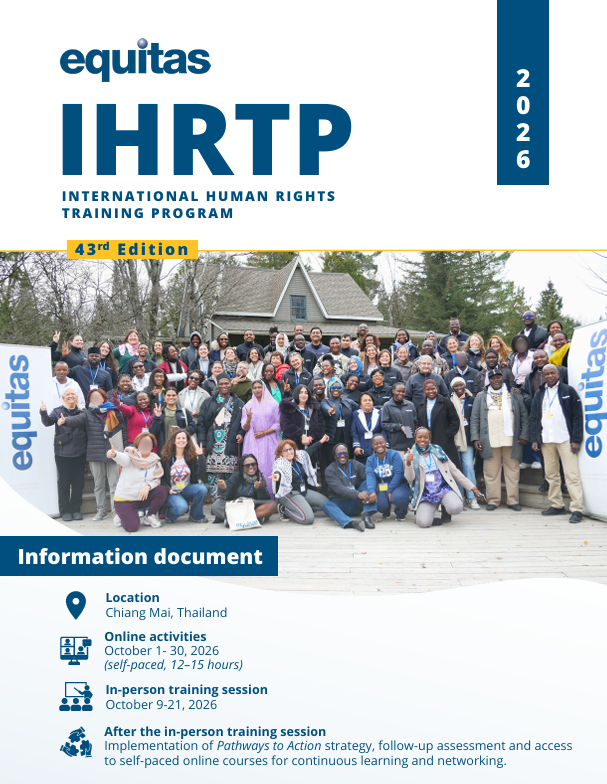
See the Information Document (pp. 7–9).
When will I receive a response?
The selection process takes approximately one month after the application deadline. You will receive a response at the end of this period.
Costs, Funding, and Bursaries
What is the cost of the training?
The participation fee for the 2026 IHRTP is $9,180 CAD.
📌 This fee covers:
- Training fees.
- Educational materials.
- Emergency medical insurance.
- Accommodation and meals for the entire duration of the program.
📌 Participants are responsible for the following expenses:
- International transportation costs.
- Visa fees.
- Tourist activities and other personal expenses.
- Meals taken outside of program-site.
Are there funding and bursary opportunities?
Yes, but they are limited. Equitas can offer a small number of partial or full scholarships to selected participants.
📌 A full scholarship covers:
- Participation fees (including accommodation and meals) for the duration of the in-person training.
- Travel expenses to attend the program, including visa fees.
📌 Important Notes:
- Receiving a bursary is not guaranteed, even if you are selected for the program.
- The selection committee awards the bursary to candidates who best meet the criteria for each bursary.
- As the number of bursaries is limited, we strongly recommend that you start your search for funding now. Please indicate in your application whether you are able to contribute to the participation fees.
How do I pay the Participation Fees?
If you are responsible for paying your own participation fees, an invoice will be sent to you with all the information needed to make the payment.
📌 Accepted payment methods: Please note that only bank transfers are accepted. No other payment method (cheque, cash, or credit card) can be processed.
Visa Process
Do I need a visa for Thailand?
Entry requirements for Thailand vary depending on your nationality. While citizens of many countries benefit from a visa exemption for short stays, others must obtain a visa in advance, and processing times vary depending on consular protocols in effect.
Once your participation is confirmed, it will be your responsibility to undertake the necessary consular procedures within the required timeframes. We recommend consulting the official portal of the Thai Ministry of Foreign Affairs (Thai E-Visa) to verify the specific requirements for your country of citizenship.
When will I receive an invitation letter to know whether I have been selected?
Only individuals selected to participate in the IHRTP will receive an invitation letter.
The evaluation of applications must be completed before official letters are sent. These are generally sent in mid-summer 2026.
Logistics Information
Where does the training take place?
This year’s edition will be held in Bangkok, the capital of Thailand, chosen for its role as a major international hub ensuring optimal accessibility for participants coming from all corners of the world. With its vibrant civil society and legendary hospitality, Bangkok provides an environment conducive to intercultural exchange and the strategic reflection central to the IHRTP’s objectives.
For security reasons, the exact training venue will be communicated exclusively to selected participants once their participation has been confirmed.
Where will Participants be accommodated?
Participants will be housed on-site in single or double rooms offering all modern comforts, including the access to several common areas conducive to relaxation and exchange. The venue is selected for its quality standards and typically Thai hospitality and guarantees a safe environment essential for rest and concentration throughout the training.
Can I stay somewhere other than the training venue?
On-site accommodation is mandatory for all participants for the entire duration of the program. The rigor and pedagogical intensity of the IHRTP require total concentration; as such, residing on-site and sharing meals together is an essential component for fostering group cohesion and immersion. Free time periods are nonetheless scheduled on weekends, as well as before and after the program, during which participants are free to stay off-site at their own expense.
Are meals provided?
Absolutely. All meals (3 meals and snacks) are covered and will be served at the training venue’s restaurant for the entire duration of the program. This all-inclusive arrangement is designed to free participants from logistical constraints and encourage continued exchanges in a convivial setting. Particular attention will be paid to the quality of local cuisine, while ensuring that dietary restrictions indicated at registration are respected.
Is the program accessible to persons with disabilities?
Yes. True to its values, Equitas is committed to making the program as accessible as possible by integrating best inclusion practices.
Infrastructure and content accessibility: We strive to ensure the physical accessibility of training rooms and accommodation. On the pedagogical side, our methods are adapted to ensure the active participation of all (digital materials, large print, visual or auditory aids, and regular breaks). While ongoing efforts are being made, some common areas may have technical limitations; we therefore invite you to inform us of your specific needs as early as possible.
Support and assistance services: For individuals requiring constant assistance with mobility or comfort, we recommend participating with a support person. Subject to available funds, bursaries may be granted to cover this person’s travel costs. Similarly, for sign language interpretation or sound amplification services, prior coordination with our teams is necessary to assess feasible options.
Procedure: As each situation is unique, we favor a personalized approach. If you have questions or specific needs, contact us as soon as possible at pifdh-ihrtp@equitas.org. We will work together to identify the best solutions to accommodate you.
Is an accompanying person covered for participants with disabilities?
Yes. Equitas recognizes that the presence of a support person is sometimes essential to ensure the comfort and full participation of participants with disabilities.
📌 Coverage terms: Subject to available funds, bursaries may partially or fully cover the support person’s travel costs, while their accommodation and meal costs at the training venue will be fully covered.
📌 Procedure: Once your selection is confirmed, if you require support, we invite you to contact us promptly at pifdh-ihrtp@equitas.org.. We will work with you to plan the logistical and financial solutions best suited to your situation.
Cultural and Religious Practices
Equitas values cultural and religious diversity and strives, to the extent possible, to accommodate participants’ specific needs. However, in order to ensure the achievement of the program’s pedagogical objectives, respect for the collective schedule remains a priority.
Other Questions?
For questions about the program or application process, write to us at: