

In rural eastern Cameroon, girls’ schooling often ends prematurely.
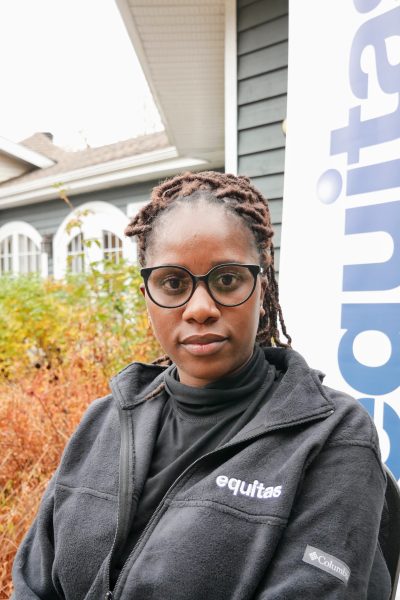
In a largely male-dominated society, boys’ education is prioritized, and poverty forces families to make difficult choices. All too often, girls see their education sacrificed in favor of domestic duties or marriage, which is considered more honorable than school. Women’s lives are relegated to “leftovers,” and the lack of educated female role models reinforces this cycle of devaluation.
“Poverty and cultural stereotypes prevent girls from dreaming beyond marriage,” explains Viviane.
A personal commitment to lasting change
Originally from Cameroon and holding a master’s degree in international relations, Viviane was fortunate to be encouraged by her parents to continue her education, a rare opportunity in her community. Today, she works for a small community association in the east of the country and campaigns for the education of young girls in rural areas.
She launched the Project to Support Girls’ Education, aware that education is not only about school, but also about changing mindsets. Viviane knows that she cannot act alone: all stakeholders must be involved for lasting change.
Raising community awareness, one step at a time
Viviane begins by meeting with traditional and religious authorities, who are highly respected by the population. She explains to them that girls’ education is a right and a lever for development for the entire community.
“The authorities are the gateway to the community; they make my message more credible,” she says.
The leaders then introduce Viviane to women’s networks and associations, preparing mothers for the arrival of the project. This approach reduces mistrust and makes it easier for parents to accept the idea of keeping their daughters in school.
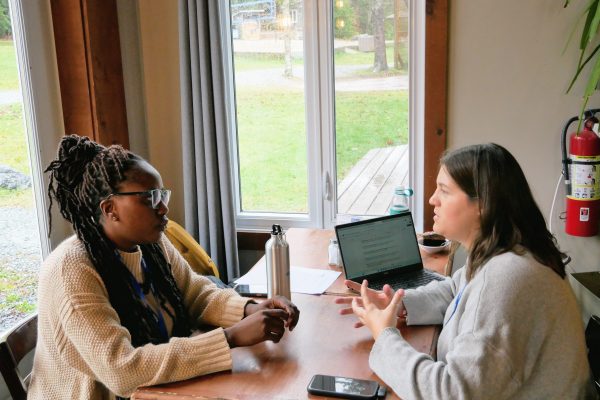
Encouraging girls to dream big
Viviane’s team identifies motivated young girls and supports them in breaking down cultural barriers. She encourages them to become police officers, soldiers, skilled professionals, or leaders in their communities, and to enter fields traditionally reserved for men, such as mechanics, IT, or masonry.
“Seeing a young girl return to school after dropping out and graduate in masonry is an invaluable victory,” Viviane tells us.
The results are concrete and inspiring: in the first year, out of 75 participants, 20 young women passed their exams. This success has restored hope and motivated other young people to stay in school, transforming perceptions of what girls can achieve.
“Parents, especially mothers who didn’t believe it was possible for their daughters to study, cry with joy when they see their children succeed,” she says.
Strengthening impact through human rights training
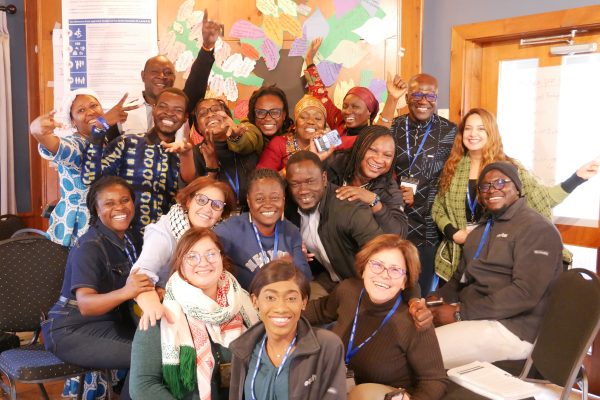
To better structure her interventions, Viviane participated in Equitas’ International Human Rights Training Program in Orford, Quebec, in the fall of 2025. The training enabled her to better convince parents, traditional leaders, and religious authorities and to adopt a systemic approach based on human rights.
She also deepened her understanding of gender issues, going beyond the male/female binary to incorporate the realities of transgender, intersex, and homosexual people.
“This new knowledge is essential for deconstructing stereotypes and promoting gender equality for all,” explains Viviane.
A lasting impact on the community
The skills and network developed during the program have made Viviane an even better-equipped human rights defender. Her work demonstrates that by using the right levers and a strategic approach, it is possible to dismantle stereotypes and make education a springboard for the future of the entire community.