

In today’s context, where gender equality and LGBTQI+ rights are sometimes pushed aside by certain donors and governments, it is more important than ever for human rights organizations to demonstrate the impact of their work. But how can we tell the stories of change experienced by communities in ways that are fair, ethical, and safe?
Developed by the Act Together for Inclusion Fund‘s (ACTIF) Working Group, the new resource Communicating the Impact of Our Projects: Lessons Learned and Best Practices brings together key learnings from Canadian organizations and their Southern partners working to advance LGBTQI+ rights. Through concrete experiences, it explores how to communicate project outcomes without putting communities at risk or oversimplifying complex realities.
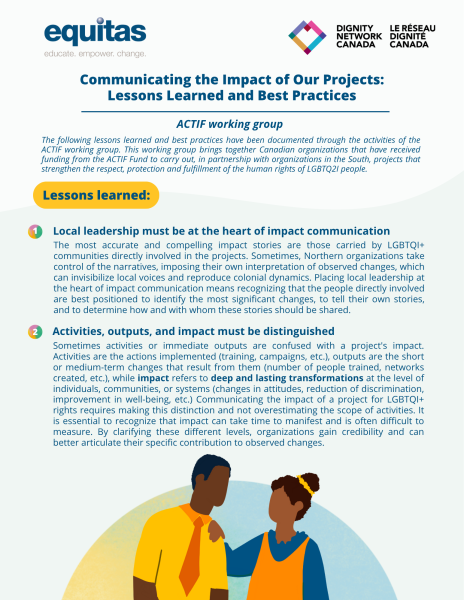
The document highlights the importance of centering local communities in storytelling, distinguishing activities from real impact, and prioritizing people’s safety over the visibility of initiatives. It also addresses the pressures organizations may face to produce highly mediatized stories or meet donor expectations.
The resource offers eight good practices for developing impact communications that are more inclusive, safe, and grounded in local realities. Topics covered include consent, ethical protocols, creative formats, strengthening local capacities, and promoting narratives focused on resilience rather than victimization.
Whether you work in international cooperation, human rights advocacy, or communications, this resource provides practical guidance for rethinking how stories are told, and who truly benefits from them. Explore it now to help build communication practices that are more responsible, nuanced, and transformative.