
Anti-Racist Youth Worker Tip Sheet: Dismantling Racism using a Human Rights-Based Approach
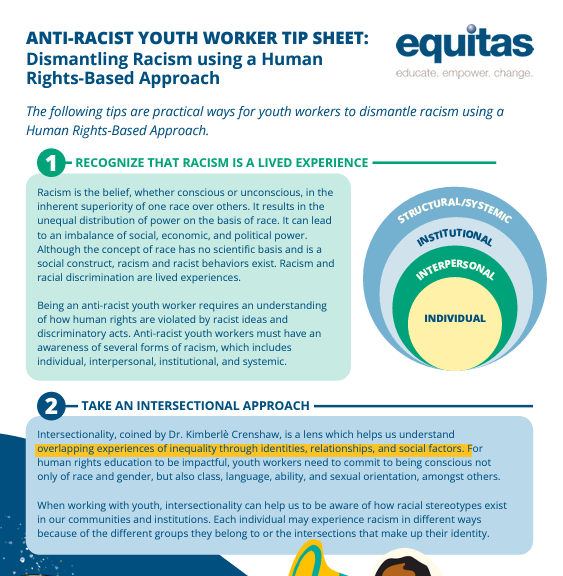
An anti-racism tip-sheet for youth workers on dismantling racism using a human rights-based approach. Also available in French.
How to stand with young leaders: A guide on practicing youth allyship
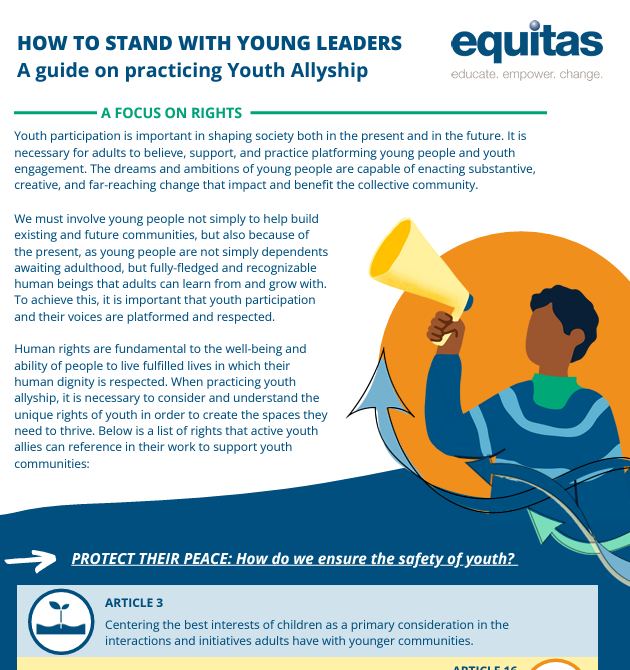
A guide for youth workers on practicing youth allyship that focuses on children’s rights. Also available in French.
Where I Live: A Community Mapping Activity
The goal of this activity on children’s rights is to map areas in communities where children and youth face exclusion, discrimination, and where their rights are not respected, while also providing them with the opportunity to discuss the changes they want to see. Also available in French.
Happy 75th Birthday: Universal Declaration of Human Rights
To commemorate the 75th anniversary of the UDHR, Equitas’ Knowledge Management Team has created this booklet, where we use archival newspaper articles, interviews, speeches by and about John Peters Humphrey as well as his autobiography to simulate how he may have answered modern-day questions and clarified misconceptions about the UDHR. Also available in French.
Elements of a Human Rights-Based Approach
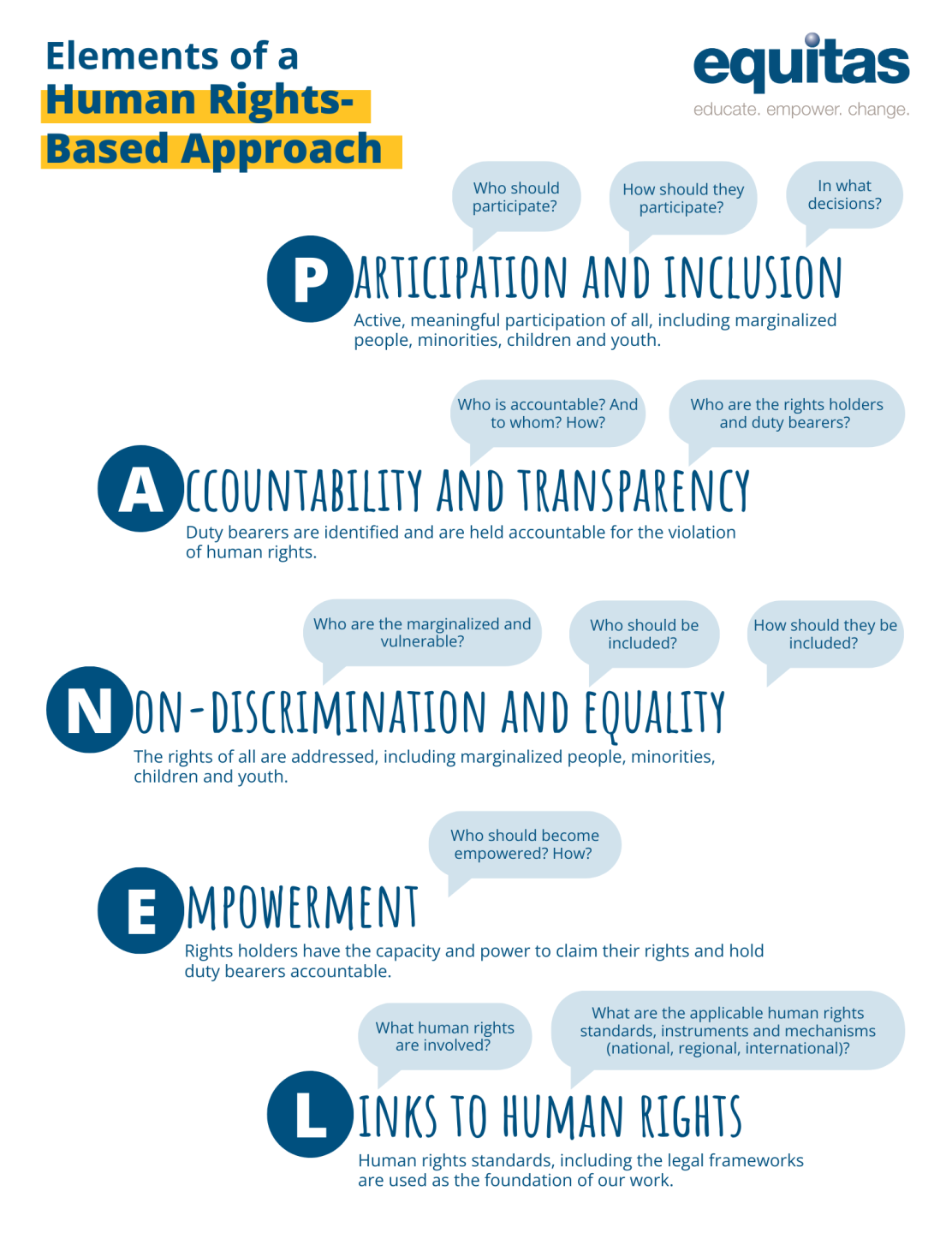
This graphic summarizes the six elements composing a human rights-based approach, using the acronym PANEL as a reminder of the different elements. It also includes questions to ask ourselves to ensure each element is covered. Also available in French.
From Saturn to Jupiter
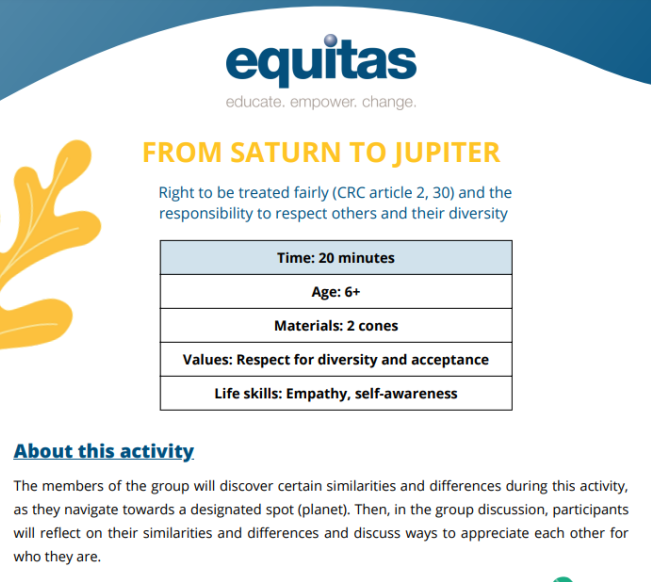
Activity to help foster respect for children’s rights and diversity by inciting children and youth to reflect on their peers’ similarities and differences. Also available in French.
A Snapshot of the Global SOGIESC Movement in Canada
Overview of Canadian organization’s involvement in transnational advocacy and in international spaces for LGBTQ2I people and communities rights. Also available in French.
To be a better ally
Tip sheet on how to be a better ally towards BIPOC folk and when engaging in the fight for racial justice. The document offers advice on how to educate yourself, how to become aware of your own privileges and unconscious biaises, and how to use your voice and activism to dismantle racist and oppressive spaces. […]
Guide rapide d’écriture inclusive d’Equitas
Quick guide on Equitas’ French inclusive writing practices since 2023, which revolves on two main techniques, i.e. epicene writing and truncated form, but also syntactic feminization and non-binary writing in certain cases. Only available in French.
Cellphilm, a Participatory Visual Technique for Human Rights Education
This document is an introduction to a participatory visual method called cellphilming and its application in the context of human rights education. Also available in French.