
Canada is not immune to the pressures facing democracies around the world.
Trust in institutions is declining. Disinformation is spreading. Foreign interference has tested our electoral processes. Civic space is under pressure. Human rights are being challenged. And globally, cuts to development funding are dismantling the organizations and networks that democracy depends on.
This is the moment we are in. This is exactly when democracy depends most on people. Canada’s resilience as a democracy, rests not on its institutions alone but on citizens who know and exercise their rights, use their voices, and hold power to account.
To fulfill the promise of democracy, we must attain and protect human rights. They are the inseparable foundations of strong societies. The principles of the International Bill of Human Rights, the Vienna Declaration and the Canadian Charter make this explicit: democracy and respect for human rights are interdependent and mutually reinforcing. A genuine democracy requires that every person can participate meaningfully, safely, and equally in shaping the decisions, institutions, and norms that govern their lives. A thriving democracy depends on people knowing their rights, having them fulfilled, and feeling empowered to speak up and shape their communities.
These are not political ideals; they are human rights.
When human rights are eroded, democracy weakens. When vulnerable communities are excluded or targeted, democratic systems fail. A thriving democracy depends on people knowing their rights, having them fulfilled, and feeling empowered to shape their communities.
Democracy as Everyday Actions
Democracy does not live only in elections, it lives in what we do between them. Achieving democratic ideals means exercising democracy every day, embedded into civic life through community organizing, access to information, accountability, and solidarity across differences.
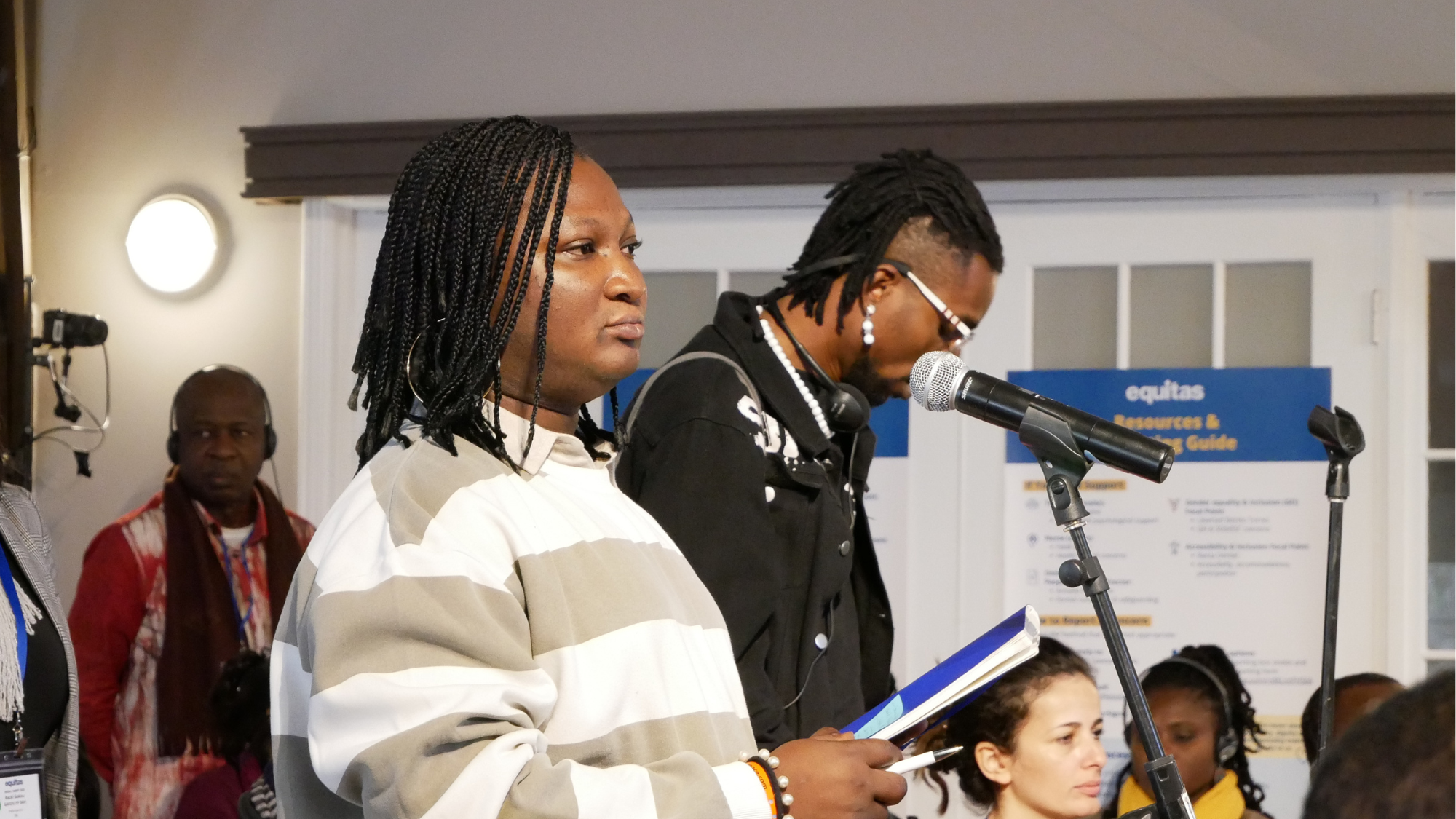
Equitas works toward this every day. Without active citizens, democratic institutions weaken, trust declines, and civic space contracts. The health of democracy is maintained by people who know their rights, exercise them, and demand the same for others. Equitas’ participatory human rights programs are built on a simple belief: when people know their rights and connect with others, they become powerful agents of democratic change.
The Essential Role of Human Rights Education
Human rights education is the democratization of rights.
It brings human rights out of courtrooms and legal texts and makes them accessible, practical, and actionable for everyone.
Unlike traditional civic education, which focuses on how political systems work, human rights education grounds learning in universal values of dignity, equality, and justice, and develops the critical thinking, empathy, and collective agency needed to put those values into practice.
HUMAN RIGHTS EDUCATION EQUIPS PEOPLE WITH
The tools to understand and advocate for their democratic rights — including the right to be heard, to participate in governance, and to access information.
Grounding in national and international human rights norms from the Canadian Charter and Québec Charter to the UDHR, ICCPR, and CEDAW, to hold duty-bearers constructively accountable.
The connections and solidarity networks to act collectively and protect one another.
The skills to recognize and challenge systems of oppression, discrimination, and abuse of power.
In this way, human rights education is not just an educational approach.
It is itself a democratic practice, one that builds the informed, connected, and empowered communities that democracy requires.
The Role of Civil Society
Civil society organizations play a critical role in the democratic ecosystem by strengthening capacity, building networks, and supporting others to voice, advocate, and influence.
Equitas works through, with, and for organizations and community leaders across Canada and internationally. We educate, build capacity, and support others to engage in democratic life. We do not speak for communities rather we work to ensure they can speak for themselves, with the rights, tools, and connections to be heard.
Equitas works with civil society organizations to create community-rooted initiatives that empower new generations of changemakers and create scalable, measurable impact in the fight for human rights and social justice.
Democracy and human rights are a common need and standing for one means standing for both. That work happens every day, in communities that know their rights, use their voices, and refuse to let either go.